
I have written posts in the past about this topic noting my chagrin that WA didn’t have a Law that required Condo Homeowner Association Boards to have a Reserve Study done. Well I’m pleased to announce that such a law was passed. Here’s a link to Elizabeth Rhodes of the Seattle Times article on the subject. The law has no teeth yet, and has everyone confused for a lot of reasons, but it’s a step in the right direction. Rome wasn’t built in a day.
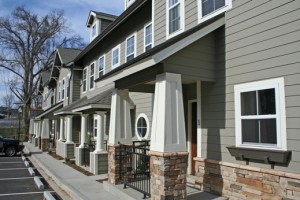 This is a subject that is near and dear to me, because I have witnessed too many times the long-term affect not having a Reserve Study, or a requirement to have a Reserve Study, has had on Seattle Area condo buyers and sellers. I am so happy about this new law I could stand on my head and spit nickels.
If you are on a condo Board of Directors, this is a VERY important concept for you to understand and embrace. Please post any questions you may have about the importance of a Reserve Study (not the law “requiring” it) and I will be more than happy to expound on the topic to the extent of my ability. I’m a real estate agent, but I had the opportunity to manage several associations and help them with Reserve Study requirements in “a past life”. I also understand the relationship of Reserve Study to setting accurate monthly dues. And last but not least, how very important it is to buyers of condos to have a Reserve Study Summary Page in the Resale Certificate.
HOW MUCH SHOULD THERE BE IN RESERVES?
Honestly, no one can answer that question unless there is a Reserve Study done and the ability to review the Reserve Study. Here’s why. Condo Reserves are not about HAVING reserves. In fact, having too much in reserves can be just as harming to an Association and condo values, as having too little.
Putting money in reserves is not like saving X% of your money for “a rainy day”. Putting money in reserves is like saving for a new bike when you were a kid. You want a bike. It costs $100. You know if you can earn and save $20 a week, it will take you five weeks. If you buy the bike, but have the foresight to know that you want a new and better one next year, you might set the bogey at $250 for a new bike in 12 months and save $5.00 a week to that end. When you have the $250, you get a new bike, or you stop saving for that particular item at that point. Reserve Studies are THAT simple.
In a Condo Association you are like a kid saving for a new bike for every “major component” of your property. NOT ANNUAL MAINTENANCE ITEMS, but REPLACEMENT COST items. So how much is enough and how much is too much to have in reserves? If you don’t have $250 the day you are scheduled to go get the new bike…not enough. If you still have $250 in the account the day AFTER you buy the new bike, you saved too much. The danger of saving too much is that you have falsely created a monthly condo fee that is too high, and your property values may have been damaged as a result.
HOW IS A RESERVE STUDY DONE AND HOW MUCH DOES IT COST?
A FIRST TIME Reserve Study will cost a lot. About $2,500 depending on the size of your Association. A 20 unit complex with no amenities Reserve Study will cost less than a 700 unit complex with two pools, an exercise room, two lakes and 8 elevators 🙂 After the first one is done, the updates cost much less and usually no one has to come out and the update is “a computer function” of numbers adjustment. You tell them you just replaced the mailboxes, and they do a reset of Useful Life for that item and spit out a new page and Reserve Study Summary. A simplification, but you get my drift.
Someone comes out and makes a list of Major Components. The Board of Directors normally sets the dollar amount of “Major Component”, though the Reserve Study Company will make a suggestion or have a standard you can follow. If you have 10 units and need a $2,000 item, it costs everyone $200 to get it. If the cost of those condos is $450,000, then maybe asking everyone to chip in $200 is not a big deal. But if the cost of those units was $159,000, then asking everyone for $200 IS a big deal. If you have 700 units, then everyone kicking in $2.87 is no big deal. Maybe you call that a “minor component” and save for that only if you have all Major Components covered.
THAT IS WHY the definition of Major Component is left to the discretion of the Board of Directors of each Association. Fees being too high hurts you as much as fees being too low. There is more than a $15 difference between dues of $295 a month and $310 a month, than $250 and $265 when it comes to property values. The Board has to be aware of pushing that fee beyond certain “keypoints” without GOOD reason.
New Roof, Exterior Painting, Replacement of Fences, Resurfacing the Pool, new mailboxes, are examples of Major Components for most Associations. NEW ELEVATOR is a really good example of why one Association with $500,000 in Reserves can be BETTER than another with $750,000 in Reserves. If the second has 3 elevators, or a very expensive many floor elevator, their Reserve Needs will be higher than an Association with no elevator and other similar Major Components excluding elevator.
(Kim asked about windows – no not windows or sliding glass doors or garage doors. Almost always they are “owner responsibility” items as to cost. The Association chooses the contractor to be used and type of product, but since the owner pays, these are not part of the Reserve Study. Each Association is different, but as a general rule, know that these items are not part of what an Association pays for as to replacement.)
WHAT DOES ALL THIS HAVE TO DO WITH MONTHLY DUES?
Monthly dues are a combination of two numbers.
1) Monthly amount needed for Operating and ongoing Maintenance. Landscaper (not replacement cost of trees but the cost of monthly service). Property Management Fees. Cost of electricity for lighting the common areas. Regular pool maintenance and chemicals (not resurfacing or pump costs)
Let’s say Operating Costs are $5,000 a month and there are 50 units. $5,000 divided by 50 equals $100 in dues for Operating Costs. Many Associations do not divide evenly by number of units, they do it by square footage or value of units, but I’m trying to keep this simple.
2) Reserve Needs.
A Reserve Study will spit out a final number and tell you what you need from each owner, each month, to have enough for replacement items.
Let’s say they need $30 from everyone for an eventual new roof, $20 for new siding some day, $10 to repaint the place every 10 years to increase the life expectancy of the existing siding and $40 for all other major components combined. Then the Reserve Study Summary will say you need $100 from everyone, every month, for “Reserves” and you must put that money in Reserves every month FOR THAT EARMARKED PURPOSE!
IN THE ABOVE EXAMPLE, DUES SHOULD BE $200 A MONTH, NO MORE AND NO LESS. $100 for monthly operating costs PLUS $100 to put into Reserves.
HOW DO I AS A CONDO BUYER OR OWNER KNOW IF THE AMOUNT IN RESERVES IS ADEQUATE?
There is a RESERVE STUDY SUMMARY that IMNSHO should be in every Resale Certificate and submitted to every owner once a year at the AGM (Annual General Meeting) or Budget Meeting (often the same meeting). It’s a few pages. The actual Reserve Study is a big book with photos, and so usually not distributed out to anyone who wants to have it. Though it is usually available for review and by appointment upon request. Often every Board Member gets their own copy, but other Association Members do not.
The Reserve Study Summary will list all major components, their useful life, and their Remaining Useful Life. These will be shown in columns for every Major Component. A quick glance of Remaining Useful Life Column will give you a feel for the health of the Association. If you see items with Remaining Useful Live ZERO, that’s a big red flag! That means the item should have been replaced, but wasn’t. Most reserve studies do not go into negative status like -5 years to let you know the item should have been replaced five years ago (I wish they did). Most often they will say “0”.
This is a long topic, in fact it takes a chapter of a book to really explain it well, but hopefully the above offers some practical information you can use to comply with this new law. It’s a good law. Embrace it. Don’t try to find the loophole to get around it.
If you walk around an area with a lot of old condo complexes in disrepair, know that was caused by WA not having a Reserve Study Requirement, to some extent. Know that a healthy Association is not only important to the owners of the condo units, the buyers of the condo units and the sellers of condo units, but everyone impacted by “an eyesore” in the neighborhood.
Great explanation Ardell. I believe every buyer and condo owner should grasp this concept. Thanks for taking the time to explain it so well. I am going to post a link back to it later today on my blog!
Thanks, Samuel. I really didn’t have the time to do it today…but it needed to be done. One of my great clients sent me the link to the Seattle Times article, so I wanted to get a practical “tutorial” out there ASAP as a follow up to Elizabeth Rhodes’ piece.
Glad you found it to be both understandable and useful. It’s difficult to take a massively complex topic and boil it down to a blog post. Hopefully this will be one of those posts where, over time, the comments add an FAQ component that expounds even more on this important topic.
While the impetus for the post was WA’s new law…the info is pretty much universal around the Country, except for the fact that a law was passed.
Pingback: Who wants to get stuck with an assessment… | Agent Samuel
As I mentioned somewhere, I was the president of a condo association over 15 years ago, and we had a reserve study back then. We didn’t update it every year (which IMHO is overkill), but he did have one.
The legislation is a good idea in concept. I haven’t read it yet, but I’d guess it needs some fine tuning.
Kary,
It’s not about “annual” or TIME at all. It’s about changes.
In a new complex where nothing reaches life expectancy in the first 3 years, you don’t necessarily need an update. In a year where you replace three things, you need an update that acknowledges a re-set of the clock on those three things, and an updated cost factor.
Let’s say a complex does a Reserve Study today, their first one ever, but the building is 16 years old. As a result of the Study they learn they need to replace 5 things. They replace them two weeks after the Reserve Study is completed. Well then they need to update it in two weeks, especially if these were very costly items.
If an Association is handing out a Summary saying they need $200,000 in Reserves and only have $50,000, that’s bad if the Reserves are down to $50,000 because they just spent $150,000 for items named as ZERO in the Reserve Study.
It’s a living ongoing document, and needs to be changed everytime money is spent FROM reserves for one of the Major Components.
Ideally there would be a user friendly program or online access for Boards of Directors to plug in the change on an Excel Spreadsheet, so the Reserve Study can be automatically updated everytime money is spent from reserves.
If the Property Management Company and the Reserve Study supplier were one in the same, that could be managed quite easily by the Property Manager. But most times that is not the case. Maybe with this new law, Property Management Companies will include Reserve Study as one of their services.
Yes, you would change your calculations, but that’s not that tough to do. The building I dealt with was built in the early 60s, so it was almost 20 years old when I moved in.
Just as an example, let’s say the roof has 3 years left, and costs $10,000 to do at the time you do the reserve study. You’d have to set aside $3,333 each year for the roof. Assuming it actually cost $10,000 to do at the end of three years, that $3,333 would be reduced to $1,000 if the new roof had a 10 year life.
You’d also have to adjust for where your reserves actually were, compared to where they were planned. If you overspent on operating expenses the prior year by $12,000, you’d have to set aside an extra $1,000 a month the next year to compensate.
Our condo had an accountant on as treasurer, so perhaps that helped, but we didn’t find it necessary to update every year.
Pingback: Condomania! Wait… That Sounds… Hrm… « The Notorious R.O.B.
Kary, I very much appreciate the exchange as I think it will be very helpful to HOA Boards to see the further exchange of ideas in the comments. I am using a “who said what format” in my reply to add clarity, so readers don’t get unnecessarily confused on this fairly complex topic.
Kary said: “Just as an example, let’s say the roof has 3 years left, and costs $10,000 to do at the time you do the reserve study. You’d have to set aside $3,333 each year for the roof. Assuming it actually cost $10,000 to do at the end of three years, that $3,333 would be reduced to $1,000 if the new roof had a 10 year life.”
Ardell responds: Correct, except it would make more sense to project the increase in the cost of a roof 10 years from now. Adjust for inflation would be best. Maybe set it at $1,200 for a new roof and get an estimate for the cost 7 or 8 years out to double check it before you need the roof.
Kary said: “You’d also have to adjust for where your reserves actually were, compared to where they were planned. If you overspent on operating expenses the prior year by $12,000, you’d have to set aside an extra $1,000 a month the next year to compensate.”
Ardell responds: That’s more about the annual budget process of determining sufficient operating costs. Technically you should NEVER use reserves for operating. You can “borrow” from reserves IF you have a valid plan to repay in a short timeframe, usually 12 months.
Here’s how it usually works. Say you underbudgeted for operating costs in 2006 and you know in September that you are going to be short $12,000 this year. First you increase the 2007 operating budget by $12,000 and adjust the dues for 2007 accordingly. Then you add the number to replenish the $12,000 to reserves to the total reserve number in the dues.
To be off by $12,000 on operating, you would have to have a pretty big budget and lots of units. Lets say there are 100 units.
First the new budget for $12,000 would be raised by $10 a month. $10 times 100 units times 12 months equals $12,000. Maybe you increase it by $15 a month to have a “misc” category, just in case, with the extra $5 a month.
Next you would increase the “amount to reserves” for 2007 by $10 a month.
So the total dues increase from 2006 to 2007 would be $25 of which $15 is in the Operating Budget calculation and $10 is in the Reserve calculation.
Many times an HOA errs by acting like there is one pot of money, when in fact there are always two that are NOT interchangeable. They need to be “manipulated” as I explained above. Short term borrowings, then increase in operating budget, then repayment of loan from Reserves.
The biggest error is the “in between” category that doesn’t exist in the calculation. Example: Roof is in the Reserve Study (say it’s a 20 year roof). NO roof money is in operating. BAD! and all too common. No roof needs nothing during that 20 year timeframe. There should be an operating expense added to the operating budget to send a guy up to check the roof every year in the summer. Re-do flashings, re-seal around vents, etc..
This is true of many items that slip through the cracks because the Major Component item needs regular maintenance during its useful life. Yet very few operating budgets cross over these items into the Operating Budget, as if they have no cost during the lifespan of the item.
Do you remember what made the budget go $12,000 that was an “unforeseen” event? Was it a non-recurring expense that could have been foreseen?
Ardell:
Interesting stuff!
Could you me tell why it is that nearly every new condo in this state gets its siding ripped off and replaced with new siding within the first 5 years.
I remember hearing why years ago (something about class action lawsuits against the builders and attorneys needing the money), but I cannot remember enough for it to make sense to me now.
CRS, I guess.
If you know, great, or could provide a link to study…
Thanks!
yes the siding issue started with LP siding, then went onto a product called Dryvit. Both products worked well for some years then began to have moisture issues. i wrote one of the original opinions about LP siding here in the Northwest recommending back priming and dipping the butt joints. cost made that suggestion prohibitive and the builders kept using it anyway until the lawsuits started.
Dryvit was a stucco coating over polystyrene as i recall. it trapped moisture in and didn’t allow the wood products to breath. in both LP and Dryvit it was claimed improper installation caused the problem while the installers claimed product failure.
the fact is that it rains here for nine months out of the year. construction practices are shoddy everywhere but here when you have water running down and around the siding for months and months at a time it’s a problem. we also don’t have that hot summer period some climates do. all in all we are a moss, mildew, and rot kind of environment. i didn’t mention mold for a reason but that’s for another time.
LP siding started the class action cases and it snow balled from there. wet wood in the Pacific Northwest is something to watch for.
now about the finances of condos. it’s one of my favorite topics. i always say condos are structure and financials. that resale certificate should be able to tell you how solvent the home owners association is. the building is the associations biggest asset aside from income and cash on hand. when you look at the building or have an inspection you should weigh future repairs against ability to pay.
it’s about time the situation is addressed and condo associations need more scrutiny. many people have been financially devastated by bad management.
Roger,
“Could you me tell why it is that nearly every new condo in this state gets its siding ripped off and replaced with new siding within the first 5 years.”
First I need to contradict David’s answer 🙂
The LP siding issue is not the answer to your question. Nor was it the first with class action suits, as I recall. Those pressed wood products (the kind that David is talking about) had their heyday in the mid 90s. They still exist in an improved version. Georgia Pacific I believe was the first, or Georgia Pacific and Louisiana Pacific were at the same time. Weyerhauser has a similar product used around these parts and found on many homes built in the mid 90’s.
Most of the pressed wood product issues and suits are a product of the 90s, not in the last five years. Their “failure” had more to do with improper installation and lack of proper maintenance, than the product itself. But it has been improved and many use “hardiplank” versions that have a lot of concrete composition. This is all from memory, but I think it’s 98% accurate.
Back to your question regarding, “nearly every new condo in this state gets its siding ripped off and replaced with new siding within the first 5 years.”
First let’s address WHY in the first 5 years? In the State of Washington a new condo Association has a set of rights to make a claim against the builder within the first 4 years. This brings out droves of lawyers contacting Homeowner Associations, looking for anything they can claim against the builder before the 4 year limit expires. Doing it too early could result in missing a defect that appears in year three. Doing it too late would cause a failure of claim under the 4 year provision.
To a large extent, huge lists of “maybe” defects are put together to get the claim in under the deadline of four years. If you are looking for something to be wrong with a big magnifying glass, you will find stuff. Nothing’s perfect. Now the builder, under the law, has to come back and “fix stuff”. So it’s pretty much the norm under this “now or never” regulation of the building industry as it relates to condos. It’s why you almost always see the builder needing to come back in the first five years. (claim in year 4, builder tents up in year 5)
A couple of year’s back, they reduced the amount of things an Association can hold the builder liable for. At that point everyone was scrambling to get a bunch of claims in before the new law passed that would diminish their remedies. So you saw a slew all at once and lots of tents all at the same time. Downtown Kirkland looked like the circus was in town there were so many tents over buildings that year.
That is WHY “in the first 5 years”.
Usually the issue is not the siding, though it may appear so when you see the big plastic tents go up. It’s more about the windows, or more accurately the seal between the windows and the exterior product. When stucco buildings became popular, they no longer put wood frames around the windows. Used to be the wood frames would rot and get replaced, but the wood somewhat protected the building.
When they started putting stucco and other exterior products butt up against the window casings, with no wood framing, it created an issue that really needs to be sealed regularly and not once and forever. When you had wood frames, the paper behind the wood that protected the interior from moisture, did not have to be as good as it does today with stucco buildings and other no wood framed window types of structures. Often this paper is put on backwards by mistake 🙂
Whether it’s LP siding in the 90’s or the first time they made a stucco building, change comes with the need to perfect a product over time. The Pioneers of “new look” often get slammed with product deficiency suits, until the new product is tested and perfected over time.
I feel sorry for the builders at times, as often it is the lack of regular maintenance, like caulking, that creates the problems in ongoing fashion.
Another big issue is decks, often damaged by what the homeowner puts on them, but the builder gets stuck with the repair if they leak or fail in the first four years.
Most caulk products used, particularly when stucco first became popular, were not long-life caulk. It was anticipated that owners would re-caulk. But I have yet to see a condo association sending someone around to check the caulk every year around windows and under sliding class doors and every place caulk is used as a sealant.
Everyone knows caulk doesn’t last a long time, but re-caulking is rarely on an Association’s “to do “list. It’s not maintenance and it’s not a replacement item in the Reserve Study, so it just falls between the cracks (no pun intended).
David,
It’s not really “bad management” as much as it is a lack of the right tools to manage well. If a Board won’t approve the cost of a Reserve Study, the Property Manager is often flying blind, especially since Associations tend to change Property Management companies fairly often.
The new law will give both HOA Boards and Property Managers the proper tool to be long term pro-active.
We live in a building that is 2 towers with a total of 516 units.We have partial reserve of 457,000.00 we have not touched that reserve in 6 years, now we need repairs and our board does not want to use this reserve, instead they will give us an assessment to fix things even though we also have 1,4000,000,.00 in the bank to fix things also. can they just leave the reserve there without using.
I’d agree with Ardell’s criticism of Dave’s response. It isn’t LP siding. But I’m not sure her explanation is entirely correct either, because I see it most commonly on buildings with vinyl siding. It seems to be an epidemic in south Snohomish County and surrounds.
I think her response as to timing is probably largely correct. There is limited time to collect from the developer, and some of these projects can cost well into the seven figures (I recall one that I think was over $7,000,000.00).
I would disagree that much of it is due to maintenance. For the short periods involved, no maintenance should have been required, other than trying to fix issues where the defects became apparent.
Ardell, as to your comments about my comments on reserve studies, you’re correct you shouldn’t take operating expenses from reserves, but if necessary that’s what you’d do. More likely, however, you simply wouldn’t be able to make the reserve contribution for the year (or certain months). Same effect.
The unit I was involved with was in fact just over 100 units, so that’s why I was saying off by $12,000. If I had to guess, this year they probably missed their budget for heat by that amount, given what energy prices have done. So it is possible to be off by that amount.
I can’t recall where I heard this so freely shoot it down 🙂
Is it true that some builders will create luxury apartments to rent for the four+ years (until they’re out of the liability phase) and then covert to condos?
“More likely, however, you simply wouldn’t be able to make the reserve contribution for the year (or certain months). Same effect.”
Well that’s a horse of a different color! Not being able to make the reserve deposit planned for and intended in a given year, and taking money from the Reserve account to pay operating expenses, are not seen in the same light. The former being not a huge big deal and the latter being a huge big deal.
It’s the difference between the answer to these two questions:
1) What do we do if we can’t make the reserve deposit in November?
2) What do we do if we need to take money out of the Reserve account to pay a utility bill.
Question one is not as alarming as question two, though net effect could be the same.
As to the heating costs going up, usually when doing the budget, you exceed the budget vs. actual by say 5% increase on each item for the upcoming year when determining the annual dues increase.. Then when some go up more than 10% and others don’t go up at all, it often balances out. Also there should be a Misc. Expense plugged in each year that compensates for things that do not go as planned.
When an HOA runs short of operating monies in a year, it should be for an extraodinary expense that could not have been anticipated.
Often I hear owners saying, as a selling point, “We haven’t HAD to increase the dues in five years!” To me that’s a big red flag that the Reserve Account may have suffererd as a result. Often Boards and Homeowners don’t treat the “couldn’t put the full amount into Reserves this month” the same as “had to take money from Reserves this month. They view the Reserves as paying for something that will be bought when they are no longer living there.
Truth is, if every owner paid their fair share of wear and tear for the months and years they lived there, the system could work out really well. But too often owners ask “Why should I worry about a roof being replaced 8 years from now when I’m moving out in 2-3 years?
bad construction practices and an associations lack of planning to maintain. there is one nugget there. the law suits lined up while legislation to get builders off the hook was put into place. i don’t follow it. i did have a client a few years back, my attorney in fact, that owned a unit in a building on lower Queen Ann.
Found a reference:
Washington State requires that construction professionals be allowed to correct construction defects before expensive litigation can be commenced. 2004
that opened the flood gates that allowed corrections to move ahead. no pot of gold at the end of that rainbow.
Bad Management; yes home owners associations are shopping management companies like crazy. some of those companies try to manage a condo building like an apartment building. deferred maintenance is a very real problem for an association.
we have a small company that has worked for different associations over the years to maintain buildings. it’s like pulling teeth to get something done right. there is one management company, Pacific Rim, that does a good job engaging the association and getting things done.
i deliberately mentioned wood framed buildings in the Pacific Northwest because we have some fantastic concrete and steel buildings here in Seattle. there is a big builder down town who is working with concrete and steel.
no matter what, the financials of the association are what you are buying into. would you buy into a business that’s losing money? would you buy a stock in a poorly managed corporation? those are the questions you should be asking in a condo purchase.
If an Association has a little operating money left over, they shouldn’t put it in the Reserve Account with the plan to take it back later. Reserves should be treated as Sacrosanct. Better to have a carry forward balance in the Operating Account. There may be a tax consequence (that’s a big MAY; I have no clue on that), but once you make a habit of dipping into Reserves for non-earmarked purpose, it can become a bad habit.
It’s like dipping into Principal and not living off the interest of a Trust Account.
I’ve seen a few Associations keep the Reserve account like separate pockets of money. “Roof Reserve” – $50,000 Painting Reserve – $10,000. If more associations did this they would understand tht they are not taking money from “savings”. Reserves are not “savings” they are “earmarked funds”. Better to say, “we can’t put in the amount for THE ROOF REPLACEMENT this month, as it’s easier for people to understand that it IS a big deal, or will be come time to replace the roof.
Often you can stretch the replacement by a year at the end to compensate for the cost difference, and not have to Special Assess at all. So being 100% accurate is not needed. Still many are so far from being accurate in any way shape or form, without a GOOD Reserve Study to guide them, that large Special Assessments are becoming the norm WAY to oftern.
David,
Agree on your last comment.
Problem is, if the State didn’t require a Reserve Study and also doesn’t require that a copy of the Reserve Study Summary page be in the Resale Certificate, no one has the tool to make good judgment. “A LOT of money in Reserves” can be grossly inadequate and NOT a lot of money in Reserves can be enough. It just depends on the Reserve Study and timeline of needed replacemnts. Without that tool, an accurate judgment can’t be formed, especially on large complexes that are harder to eyeball.
Biggest problems I have seen have been with tile and flat roofs. Since you don’t “rip them off and throw them away” every X years, they often are not on the Replacement Cost list as a major component, NOR are they in the Operating Budget. The cost of deferred maintenance of a flat or tile roof, and resultant damage of improper ongoing maintenance, can be devastating to an Association.
That brings up a point. Often Tile roofs do not show on a Reserve Study initially, as often Reserve Studies do not show a Major component whose life expectancy is in excess of 30 years. Say an item has a 35 year life expectancy, like a 35 year to 50 shingle roof. That item may not appear in the Reserve Study at all initially. It’s supposed to be picked up later when it gets to 30 years of remaining useful life.
But with Boards hiring and firing management and Reserve Study comapnies to save a few dollars here and there, or because residents aren’t “happy”, lack of continuous record keeping wreaks havoc. NO Property Management Company is going to load in 18 years of records into their computer from the 18 years prior that the place was managed by 5 different Property Management companies.
By switching management companies, you lose a whole lot of important info! Sure, it may be in a box stored in some warehouse somewhere. But that’s not the same as it being available by a touch of a button in a computer. Then there’s a claim of “mismanagement” when in fact the culprit is “lack of continuity”.
Oh…big one. Self managed Associations. That’s a big red flag.
Five homeowners running the place without the assistance of a Property Management Company on a huge condo complex is a formula for trouble. Maybe the 5 people who thought up this cost saving master plan where capable of managing it themselves. Then they move away and five new poor people are supposed to know it all and do it all on their own.
Be wary of voting to approve “self-management” of your condo complex. Could be great today because “Leo” is a whiz at accounting. But too often a company is not brought in, when Leo resigns or moves. Better to have a system of checks and balances between Property Management Company and The Board.
Two things. Ardell, on your last post regarding self-management, here’s another reason complexes shouldn’t self-manage: do you really want to be asking your own beloved neighbor why they’re so behind in dues?
And Rhonda, I guess we’re lucky here in CA. Our builder liability lasts for 10 years.
I really don’t know whether to laugh or cry about the amount of information here. It’s a whole bunch of information.
You get a whole building inspection.
When you look at the financials you look at all the financials and go back as far as you can. You get the minutes of the last years meetings if not more, and talk to other condo owners.
Buying a condo in Seattle is risky.
No State legislation is going to fix anything concerning the financial health of an Association. You have to look at the numbers. You have to look for irregularities. This is not a buyer beware state, but you have the responsibility to look and use your own good judgement.
“No State legislation is going to fix anything concerning the financial health of an Association.”
David! There is no way in h_ll that a condo inspection includes the entire complex including the pool and every facet of a large complex, nor could a condo buyer afford such a thing!
You think a buyer is going to pay $2,500 to have a complex inspected?
Don’t badmouth the value of the Reserve Study. NO ONE can determine the financial health of a condo complex without one. They are not all “buildings” as in “a building”. Try Sixty-01 with 83 acres and 770 units! Get real! “whole building inspection” is NOT an adequate answer for a large complex of multi buildings, with 9 elevators, two lakes, etc.
Buying a condo in Seattle is risky.
As I said, over many years my little companies have done both maintenance and repair work on a variety of properties.
Condo Association or Condo Management companies, in my opinion, are less than forth coming about the health of the building, complex, or surrounding areas.
You are dealing many times with hundreds of thousands of dollars in repairs no one wants to address or pay for. My companies have refused many, many times to cover over issues that needed more intensive repair than what was required.
There are companies that will cover known defects for a fee. The larger the complex the more possibility for deception. One building that comes to mind had a President of the Board who kept the place pretty for decades until he moved to a nursing home. The repairs were in the hundreds of thousands of dollars for rot repair.
My biggest concern, and I’m sure it was the impetus of this legislation is the condo conversions that have been popular. Many of those building were built to have an economic life that once hit becomes a yearly challenge to maintain. The prevailing thought of the day was that a building could generate income while the dirt it sat on increased in value.
Yes, this is not a buyer beware state, however the buyer of a condo should be wary. Yes a whole building inspection is what I recommend to any condo buyer even if the building is new, or especially if a building is new, a comment for another time.
The good news is that Seattle has some great concrete and steel condo projects, I noticed in down town Bellevue yesterday that there was more than one concrete and steel structure being covered with a glass shell. I think this is great and far thinking of development in Bellevue.
Sorry I just noticed you are talking about the value of a Reserve Study.
let me say this; if you read the way the article is written it does mention financial hardship. there are also going to be, as sure as i’m sitting here, when i should be working, many maneuvers by Condo Associations and Management companies to circumvent the Reserve Study. There is a lot of talk on this site about attorney’s looking for lawsuits, you really never want to go there.
so yes, i think a whole condo building or complex inspection before buying into a condo project is money well spent and the only thing a Real Estate agent can recommend.
Does the new law require HOA’s to actually collect dues sufficient to cover the projected capital expenses? Or do they just have to do a study?
Our deal in Edmonds a couple of months ago failed because the HOA did not assess or collect dues to fund a capital expense account. In fact, it did not even establish such an account despite a clear requirement to do so in its own CC&R’s. We received the documents revealing this mess at 9 pm on the last day of the period the seller had for providing them, after we had already paid for the inspection and the loan appraisal.
I don’t know any state that requires an HOA to follow the recommendation of the Reserve Study regarding the $ amount to be added to the dues and held in a Reserve Account.
But if the Homeowners were getting a copy of the summary page of the Reserve Study with the Annual Budget, hopefully there would be some pressure by the owners. If they have a Reserve Study Summary saying recommended into reserve account minimum $50, recommended $80, and the budget says $5.00, hopefuly someone would notice if those ducuments came at the same time before the new dues were passed.
I don’t know how the new law handles the study being seen by the owners. The method and laws I am referencing and familiar with are from CA. Perhaps WA will emulate the same provisions.
Here’s how it would work, David.
You said: “The repairs were in the hundreds of thousands of dollars for rot repair.”
Say that rot was in wooden partition fences between patios. Say they have to be painted every 7 years so they won’t rot. No, a Reserve Study won’t make them paint it. But at least a buyer can see that they didn’t paint it when it says “useful life remaining ZERO”. When a buyer sees lots of Zeros, meaning deferred replacement or painting, at least they know not to buy there.
When no one can sell their condo and the values go down as a result, someone will do something about that. No Reserve Study, no information, equals years of no action. If buyers are buying because they can’t see those zeros, no one is going to fix the place up well enough until it gets really and too bad.
in my example the fences were painted on a regular schedule. they were really pretty.
the bids were cheap so some corners were cut. paint is cheap, prep work expensive.
buying a condo is risky in the Seattle area. there are thousands of tricks to circumvent any government requirement.
using a government requirement isn’t going to fix a building. a buyer needs to inspect, investigate, and read the financials. condos don’t need to sell. it’s not a right to sell a property. if you bought poorly then the consequences are yours alone.
It sure would be nice if listing agents would ask the seller to order the Resale Certificate when they listed the condo so it was immediately ready for the buyers review.
I think the resale certificates are only valid for 60 days, which is why they aren’t ordered on listing.
The main reason Resale Certificates are ordered when there is a buyer, and not at time of listing, is to be sure the Reserve amount is as up to date as possible. I think there could be an up front fee and then an “update fee” at time of contract, if you want to do it in advance and then have it updated at time of contract. Might cost $150 or so plus another $75 or so for the update. Depends on the Management Company’s schedule of fees for various services.
My point on Resale Certs is that they are a critical piece of information for a buyers review.
I had a buyer interested in a condo where we didn’t get a copy of the Resale Cert for 2 weeks. The buyer then rejected the condo based on the info in the Resale Cert, mainly because they had that 2 weeks to obsess over the decision, and in that 2 week wait, decided that another condo might be better, so rejected the condo based on the RC. After a week, they calmed down, came back to condo # 1, but waiting “too long” can cause problems such as this.
Some condo HOA’s get the Resale Certs out really quickly, but sometimes there are reasons that doesn’t happen: vacations, illness, etc. Usually the HOA’s with management companies are much faster. But, making a buyer wait for critical information is a risk, it’s a consumption of time that often makes a buyer really antsy.
For a seller, I’d recommend ordering the RC right away, and be willing to pay for a new one, or any updates as needed. Whether it costs you $150 or $75 extra … you’re selling a pretty expensive product, and it’s best to be prepared.
And, from the listing agents’ point of view, I’d sure like to read that RC early, so I can advise my seller of potential areas of concern.
Ardell, can you use Dustin’s new video system to show us you standing on your head spitting nickles … gotta see that one 🙂 🙂
Leanne,
I’m posting with a hard hat on this morning…long story…the whole house is in stitches. If I videoed all the time, it would be a sitcom.
The video I really want to do is the one from Saturday morning where I shopped for staging the Redmond townhome. I ran in and out of World Market, Pier 1 and Aaron Brothers. I run through the whole store quickly with Kim and say, I want THIS, THAT and THIS and THAT. Then I run into the next store while he’s checking out, and we start over again. 30 minutes to two car loads of staging “stuff” including two bar stools, that take a separate trip for pick up and drop off, while I’m staging at the townhome.
I’m so tired I had to do Sunday Night Stats on Monday Morning! At least I’m finally getting a haircut today before Broker’s Opens tomorrow and Wednesday. I’ll probably fall asleep in the chair over at Salon Bella in Bellevue. Someone can video THAT 🙂 I haven’t had a haircut in months…I’m starting to put it up in a bun Yikees! Break for haircut has become a priority today.
A video of ARDELL with client’s baby on hip while staging, would have been fun too…
I live in a 4 unit HOA, with each of it as an officer and self-managed. WIth only 4 people, anything approaching $2,500 is too much for a Study. Do you know of reserve study companies that pare down that cost for a truly small HOA like ours?
We have $12k in the account, and I feel we need higher dues ($250/month currently). I know a study will back me up on that, but to get the study done cannot cost 1/4-1/5 of our balance. Kind of guarantees the study will say we are low, eh?
So, while I like the study requirement, and we could debate the “pay me now or pay me later” of affording a $2,500 study for 4 people, I would avoid having one unless I could get a cost on it more in-line with our size and means. After all, to me, paying too much for a study is just as stupid and wasteful as paying too much for a fence.
Thoughts?
RE: Condos – How much should be in reserves?
While I applaud your attempt to clarify the reserve study and what it is, in reading your article and as a professional reserve study provider the blanket statement that most reserve studies cost $2500 is very misleading.
Our reserve specialist for HOA Services Group, LLC has done over 100 reserve studies in the last three years. It is unusual for a reserve study to cost less than $3,000 for all but a small & simple association. We do have a payment plan for small associations who do not have the resources to pay the entire cost up front.
Our reserve specialist spends an average of between 60 to 100 hours to put together a credible reserve study. That includes the time spent on site gathering data and assessing the condition of the components.
RE: Remaining Useful Live ZERO
Our specialist also has a section that addresses component items needing immediate corrective action for studies done by us.
We have done studies all over the Northwest and our goal is to give our clients a first class document which will enhance and maintain their community at a fair price. We meet with the board of directors prior to beginning our work and when we are done we deliver the finished reserve study and answer any questions the board may have. We also frequently meet with the association at large to explain the document and it’s impact on their investment and to answer questions.
Lastly, I wish people could follow our specialist around and see what kind of time and effort he puts into putting together a credible reserve study. I have and it is an exhaustive process, primarily because he feels it is incumbent on him to do the kind of study for all associations he would want done for an association he lived in.
Best Regards,
L. Law Broili
Operations Manager
HOA Services Group, LLC
Please send me literature about your organization. I belong to an HOA with 33 units. We are considering a reserves study. Thank you. Bill Hinely
I believe condo reserves are mandatory in California. Needless to say, the vast majority of condo associations and HOAs a under-capitalized. Many cant even keep up with regular condo fees and assessments.
I’m the president of an association with 4 units and only 4 owners. We all live under one roof (3 story building, 1st story is garage, 2nd are 2 condos, 3rd story is two condos) Does anyone know how much an reserve study would cost for such a small association? Thank you so much!
Generally for a 4 unit complex you would do your own. Even where there are laws requiring that a Reserve Study be done for condos, there is usually a minimum number of units that need to comply and 4 is likely under that number.
**Update – I can’t see a minimum unit requirement. The Law seems to require a Reserve Study unless the cost would cause undue hardship to the unit owners, and undue hardship is not defined. So you likely would need to get a cost estimate even if you decide the cost is prohibitive for 4 units. I put a link to some Reserve Study companies in the comment after this one for your convenience. The numbers I have seen for an averaged sized complex is $2,500 for the initial study and $1,500 for updates. Prices will vary. If you decide not to do one by a qualified professional, it might be wise to consult an attorney and have a letter on file regarding why you haven’t with an attorney’s “blessing”.**
If you are local, shoot me an email. Maybe I can help you do one. Having a Reserve Study Company review one that you have done, might be a better approach. Like doing your taxes and then bringing everything to H & R Block before filing it. A double check is likely a lower cost. I don’t know that the Reserve Companies offer this feature, but I know some people who may do that for me as a favor at a small cost to you.
Reserve Studies usually have a minimum cost, and for 4 units it is likely best if you do all or most of it yourself. I doubt you have complex issues like elevators, spas and pools, so it shouldn’t be too hard. If you are local, I will come over and take a peek at the building. There’s one near me with 4 units similar to what you are describing, and would probably take 30 to 45 minutes to rough up the Reserve Study. The advantage of doing it yourself is you can update it yourself, as every Reserve Study should be updated annually, and that added additional annual cost for 4 units is unwarranted. Paying for one that is just going to get old, is not likely a worthy expenditure vs. doing it and updating it yourself.
I think I’ll do a Reserve Study for a Single Family Home. Most home buyers would like that and the format would be similar to your building. Reserve Study is basically about Replacement Cost of “major” vs “minor” components and does not include operating costs.
Suzann,
Here is a link to a list of Reserve Study Companies you can call for a quote. Some if not most will require on onsite visit before giving you a price, but you can try calling a few for a “ballpark” cost.
http://www.wscai.org/Reserve-Studies~17405~294.htm
Great article!
I was recently elected to serve as the treasurer of my Condo Association, so I’m doing some research on reserve studies, and this really helped explain some things. Eventually, we will have 196 units, though currently only around 145 are occupied, with the rest in some stage of construction.
We just reached the threshhold, so the developers have just turned the association over to the new board of directors, which includes myself. We are currently working with our management company to have a reserve study completed. One quote was around the $5,000 range, though the management co. thought that was too high and that it should be closer to the $2,500-3,000 range that you mentioned, so we are obtaining several more quotes. I’m very interested in what the study has to say, though being such a new community (the oldest units are only 3 years old), I think we should be in good shape. We already have quite a bit in reserve, so I’m wondering what our target number will look like.
Brad,
It would be great if the law required that the developer pass on the initial Reserve Study (at his cost) when they turn over the association to the owners-Board of Directors. In fact, check the new law and see if it required the developer to have a Reserve Study done during the term of their tenure. Would be worth looking into, I think. If the developer was the HOA for a few years, they likely were required under the new law to have one done…or at least reasonably expected to have had one done. Then the owners would be responsible for future updates of that study.
Also the developer would be proving, via that Reserve Study, that they are passing forward the correct amount in reserves with the duty to oversee.
You question brings up another issue. In slower economic times, large HOA complexes are not built in the same 1 year or 18 month period. I saw this before in the previous recession. Complexes started in 1990 but not completed (due to low sales volume) until 1995, as example. When all buildings are not built in the same year, with a 3 year variance, you have to come up with a method of accounting for that difference.
Building A may have 7 years left on life expectancy for painting, while building C has 9 and building E has 10. That is why it is important to not simply pay someone else to do the Reserve Study. The Board of Directors has to know their complex best and better than any outside stranger, to direct the Study in a meaningful way. There are many ways to account for that 3 year difference. The Board has to decide how to handle that, and direct the Reserve Study Company accordingly. The tail doesn’t wag the dog on that one.
In addition to a normal Reserve Study, you want to check on the new FHA guidelines for amounts in Reserve. Not being FHA approved can kill property values, and a year or so ago FHA imposed “new rules” for reserve requirements that do not necessarily dovetail well with the run of the mill Reserve Study Requirements. You want to have a “but not less than X; the amount needed for someone to buy a unit via FHA” as part of your Reserve Requirement. Also make sure the developer went the extra mile to get FHA approval.
Being “newer” does not make much difference in the grand scheme of Reserves, as each year the amount to go into Reserves is the same, except as adjusted for inflated cost of replacement. So year 12 and year 3 do not look much different, as they are both one year’s worth of future replacement cost. The money spent from reserves increases as you move forward…but the money put into Reserves should be relatively constant from year to year.
Specific to your questions:
1) Pick a Reserve Study Company based on the long term cost of updates and not merely the cost of Initial Reserve Study. Switching companies is costly and updates are important. So look at it more from the cost over 10 years. Say it is $5,000 for initial study and then $1,500 for updates. The need for updates in the first 5 to 7 years is likely nil, given not much in the Reserve Study has a replacement need in the first 5 years and the board can subtract one year each year from the Remaining Useful Life column. Or find a company that will do that automatic adjustment each year with little or no cost.
2) Stop thinking $5,000. That is not a realistic way for a Board Member to think, especially The Treasurer. Get in the habit of taking things down to the “per owner” realities. $5,000 divided by 196 units = $25.50 in a year divided by twelve months = $2.12 per owner per month. $2.12 per owner per month this year for a Reserve Study is not “a hardship”. There should be $2.12 per owner in the current dues to pay for that Reserve Study. Any budgeted monthly dues without a few bucks for “miscellaneous” or Reserve Study, does not have the right amount set for monthly dues. So get a good long term company.
Let’s say the cost is $5,000 for the first year and $500 a year for the next 4 years for updates, as and if needed. Max cost for 5 years is $5,000 plus 4X $500 = $7,000 divided by five years = $1,400 a year divided by 196 units = $7.14 a year divided by 12 equals $0.60 per owner per month.
That $5,000 is potentially and somewhat realistically only sixty cents per owner, including updates, for a five year period. Well worth it.
Board Members should always think in terms of monthly cost per resident, as doing so will prevent you from cutting corners on important items over the long haul at time of replacement.
As to there currently being 145 units and eventually being 196 units…you have to make a decision there. I would divide by 196 IF I was positive that 196 would eventually exist. For instance if this is a high rise building with 196 units already built but not occupied, vs garden apartments where the last 50 unit buildings may never be built and turned into a huge “tot lot” 🙂
You can pass the overage for the units not yet occupied, but built, to those unit owners as they buy in as a “move-in” fee. Most HOA’s have a “move in” fee set by the Board. (they also have a move out fee). I think that’s a better way to handle it than having the current 145 owners pay for the 50 owners not yet in place. I’d have to know more about the building etc to be sure, and it’s a judgment call that would be the first order of business for the Board. But try to spread the Reserve Study cost out over the years of periodic updates needed. That will diminish the cost per owner per month. Make the Reserve Study cost part of the Annual Operating Budget or part of the Reserve Study itself as a “minor component”, depending on how frequently you plan to do updates. Every 3 years or earlier if needed, is a good rule of thumb.
Ardell raises some good points, but is also incorrect on some important issues. “The need for updates in the first 5 to 7 years is likely nil, given not much in the Reserve Study has a replacement need in the first 5 years and the board can subtract one year each year from the Remaining Useful Life column.” Incorrect. You seem to think that the amount of changes is the sole cause to update the Reserve study. Just as important, if not more important, is the fluctuation costs of the 3 most important components in a Reserve study, asphalt, painting, and roofing. A Reserve study needs to be updated at minimum once every 3 years (this is the law in California) to keep up with these changes. For example, many associations thought their Reserves were strong after their 2005 study, but did not update it again. Oil prices skyrocketed, and the associations were now behind schedule because they did not keep up with current pricing. Waiting to update a Reserve study for 5-7 years is asking for disaster. Also, updating a study is not as easy as just subtracting 1 from the remaining life. The costs need to be updated for every component (assuming the study is a year or more older), and the Reserve balance needs to be updated. Run away from any company who offers annual updates for free as Ardell suggests, as these take time and work to be accurate, and any company doing updates for free is likly not putting the amount of time and effort into the report that is needed.
John,
What Reserve Study “major component” involves oil prices? Seems you are mixing the operating budget, which is done annually, with the Reserve Study. The Reserve Study only deals with replacement value of Major Components. Those costs are never “accurate” numbers, and you can’t get real cost estimates every year for free from the variety of contractors and vendors involved. Best you can do is add an increase % factor, which can be automated.
Sure…paying 16 vendors to give accurate cost estimates every year might be “ideal”…but it makes no “dollar sense” to do so.
That said, I wouldn’t argue if WA copied CA on the 3 year requirement. But from what I am seeing, the cost of major components is going down…not up. I’m seeing better prices for a new roof now than a couple of years ago. More contractors need the work now, and their bids are coming in lower…not higher.
Would love to know how oil prices affect an item in The Reserve Study vs in the Annual Operating Budget.
In response to: “What Reserve Study “major component
*correction: I would highly recommend AGAINST board members going this route for any more than 1 year.
LOL…I had a feeling you were a professional in that industry. Thanks for agreeing that the cost of a roof went down at the same time the price of oil went up. Your point seems to be hire a Reserve Study specialist as often as possible, so it is important that you note that you are in a profession that benefits from that advice, and not post as a “John Doe”. Disclosure of a potential profit motive is pretty much mandatory.
I am seeing outrageously high costs here in WA (vs in CA) to do a Reserve Study. I’m not sure why. It looks like the new law to have one prompted some providers to jack up the cost of them by 100% or more. Sad.
Actually, if I was posting to make a profit, I would have put my real name, and the name of my company. I have done neither, because that is not my intention. I am not even located in Washington. Your comment that roof prices went down even though oil prices went up is incorrect. Oil prices were extremely high, which is when asphalt and roofing prices went through the roof. Now that oil prices more or less have stabalized, asphalt and roof prices have dropped to a more reasonable level. Asphalt and roof prices are indeed tied to oil prices, I don’t see how that can even be debated. I did not say HOA’s should hire a Reserve specialist as much as possible, in fact I believe I even said board members could get by for 1 year on doing it by themselves, if there is someone with the ability to do so. In Califonia, the law is that an ON SITE Reserve study must be done at least once every 3 years. It would also be a good idea to have a professional update the report with a NO SITE VISIT once in-between this 3 year period. I can’t speak for the pricing in Washington for a Reserve study, as I am not familiar with those prices. I have seen in my state prices have gone down, since more companies have entered the industry creating more competition. Although, I have seen cheap Reserve studies, and all I will say is you get what you pay for. To give you an idea, a 100 unit condo complex with a smaller clubhouse and pool, in my area would cost roughly $1,800 for a full, first time report. I don’t know how that compares to Washington. Keep in mind, the example property I mentioned would require a full day at the property measuring and inspecting roofs, asphalt, paint, clubhouse and equipment, pool and equipment. It would also include another roughly 2 days in the office researching and creating the report. An update to the example property in the future would cost roughly $1,200, since measuring the roofs, asphalt, painting, etc. is not required for future updates. The difference between a professional study and a board member/community manager’s study is 99% of the time night and day.
I totally agree with you John, and worked on those in CA. Those prices are good, and at those prices everything you say makes sense. The problem here is because there was no law for so long, the new law is bringing out bids of as much as $5,000 for even small complexes with no or very few common elements or amenities.
Maybe over time prices will get to normal…but right now the bids are often so outrageously high that some complexes are left with no choice but to do their own, or at least update them for a time once they get them. I have seen one company wanting the same price as the initial Reserve Study for the 2nd year update.
We also have some single family home developments, non-attached – no public amenities, being classified as condos. Given there is virtually no common elements and that HOA is only classifed as “condo” because of the small lot size, obviously their needs are not equal to what CA requires of a “condo” complex.
We also have some “complexes” with 12 or fewer townhomes, and dividing $5,000 by only 12 people and expecting them to pay that annually, just makes no sense at all.
Last but not least, and a change from the time I wrote this post, FHA has completely changed their “Reserve Requirements” and Boards have to balance keeping their FHA approval with what any Reserve Study may or may not say. This is hugely important as property values are greatly influenced by whether or not buyers can use an FHA loan to purchase.
Yes, that is crazy to update Reserve studies for the price you speak of for a simple condo complex. Although, a $5,000 Reserve study is not uncommon. I have done many $5,000 Reserve studies, but these generally include ~400 condo units, 1 or 2 large clubhouses (~8,000 sq ft), 2 pools, tennis courts, etc. I am doing a $30,000 study right now, but this is for a very large development that includes 3,000 homes, 3 golf courses, 9 lakes, 3 clubhouses, 29 miles of roads, etc. etc. There really is not a “set” price for a Reserve study, because it varies greatly depending how many common area components need to be included. I have also done Reserve studies for large timeshare resorts in Mexico, and the price of the study often works out to a large amount per unit, but these resorts have millions of dollars of mechanical equipment, elevators, desalination plants, etc. so it is very time consuming. These large resorts also update their studies every year. It’s important for board members to understand that the price of a study is based on the common area components, and not how many units there are (although, this is usually indicative of one another). So 2 different 100 unit condo complexes can vary greatly in the price of a Reserve study.
John,
I still think you should use your real name 🙂
I also still think every Board should know how to update their Reserve Study, as I find that those who don’t understand what the Reserve Study says beyond how much to collect from each owner…also don’t know how to apply that money properly. I think they should mark up the Reserve Study with what they spent on what, as that would help them realize that the Reserve monies are earmarked, and not just a savings account to be used for whatever.
It’s not enough to simply have a Reserve Study and collect the right amount into reserves from each owner. The Board needs to have a good “working” knowledge of that Reserve Study. I’m sure you’ll agree that all too many pay for it, and then just stick it in the drawer until a law says they need a new one. Training the Board doesn’t help, because Board Members change too often. So making them part of the process of doing the Reserve Study, no matter how small a part, is good for the whole community vs simply paying some one for a big book that gets put away.
I 100% agree. Most board member’s don’t understand how to properly use and apply a Reserve study. And I love the more board member’s and community manager’s get involved with the study, because they know the property better than me, and often can provide good insight. After all, a Reserve study is for the board and is supposed to be a helpful tool, but its benefits are lost if the board doesn’t understand the study beyond what the recommended Reserve contribution is. I would estimate that maybe 25% of the studies I complete are truly understood and used, because many managers or board members simply get the study done and then it is filed away and forgotten about. Completing a Reserve study is just the beginning, not the end. It helps to establish a long term plan and goal, but that goal is a moving target, so the board needs to be educated and involved in order to fulfill their fiscal responsibility.
Thanks for the conversation, John. I have always wanted to give a Single Family Home Reserve Study to my clients when they buy a home. I don’t think the general concept of Reserve Studies and their function are beyond the abilities of the average person, and would be useful to most any family. In fact I think getting a Reserve Study when you buy a home would be almost as useful as the home inspection before yo buy it.
I tend to be a Utopian Idealist 🙂
I’m seeing some signs of the possibility in the future where a seller would transfer their reserve to the new owner at time of purchase, with their fair share of roof “reserve” for useful life used to date. More and more home buyers are thinking that a seller should contribute to the cost of a new roof, if the house needs a new roof in 3-5 years from purchase, even if it does not need a new roof at the time the home changes owners.
I think it would be a great idea. Unfortunately most lenders would not allow the “credit” towards the future replacement roof even if the seller were willing to pay it.
I like your idea, and have thought about that before and if it will ever come to fruition. Maybe we are both Utopian Idealist, haha. Pleasure talking to you as well, and thank you for your insight and bringining awareness to the importance of a Reserve study. Best of luck to you.
I also really like the idea of reserve studies for single family homes. The only problem is that most home owners don’t reserve for things like the roof, paint, etc… And when they sell they certainly won’t leave you with a pile of cash, and the buyer would probably rather have a lower purchase price. However, for the home buyer that plans to live in the home long term it would be a great idea. Even a 10 or 15 year study so they know what to expect and how much to save over the next few years. Maybe something to include within a home inspection, it would certainly add value. Condominiums aren’t the only buildings with major expenses to be planed for. Good discussion… thanks.
Being in a condo board of directors in undoubtedly a heavy duty,therefore one should definitely be very careful to decide how much should there in reserves.
As Treasurer of my 31 unit Condominium, I have personally undertook the responsibility of conducting a Capital Asset Reserve Study. The Board still needs to be educated as to how the Reserve is funded and used. Since the Board has resisted my request to increase the assessments our reserve is not properly funded and to properly fund it we have used Special Assessments. My analysis for determining future replacement is the use of Future Value to allow for inflation of the cost when it comes time to replace the asset. Our Budget is to be voted on in December and the Board still refuses to increase the assessments, so a second Special Assessment is being determined to not only back the reserve needed, but at the same time include an amount that ineffect would cover the increase in the regular assessment without actually raising it for a period of six years. I am to present this idea to the Board and to the unit owners. Please comment on any ideas that might be usefull to win over the unit owners.
Stan,
There isn’t enough detail in your comment for me to jump to Stan is right and everyone else is wrong. 🙂
A few things that jumped out at me:
1) 31 units
There are times when the number of units in a condo association creates the need for the community to operate as a hybrid between a well run condo association and the normal framework for maintaining a single family home. The best example is an 8-plex vs a 220 unit complex. An 8-plex and clearly up to a 12-plex will rarely be run so that there is never a need for a special assessment. There just aren’t enough unit owners to build the reserves to the point where no major improvement can be done without being at least partially funded by a special assessment at the time the improvement is needed. 31 units may or may not fall in that category depending on the way it is built and the number of extra amenities. Just saying NEVER having a special assessment at the expense of over funding or over charging on the monthly, is not always the best game plan. The smaller the complex the more that is true.
2) “I have personally undertook the responsibility of conducting a Capital Asset Reserve Study.”
That you have personally undertaken the task of creating the Reserve Study makes it more difficult for people people to reach in their pockets and pull out the money to fund your version of a Reserve Study. You may have, in their opinion, overstated the cost or the number of items on that list or added an element of 100% funded being the goal. Most any Reserve Study done by a professional company will clearly state that 100% funded is almost never the goal. The recommendation as to the amount of change in the dues at the end of a Reserve Study is rarely, in fact I have never seen it, to be 100% funded.
3) “My analysis for determining future replacement is the use of Future Value to allow for inflation of the cost when it comes time to replace the asset.”
That is not usually the most common method used unless the item needed is already past its life expectancy and the need for replacement is near at hand. For instance if you just replaced the roofs at a cost of $150,000 and they are a 40 year shingle, you would not project all at once what a replacement would cost 40 years from today and use that for the reserve study. You would normally use the cost of today and then add a gradual increase in cost to keep up with inflation over time. You would not assume the cost will be double that by the time the new roof needs to be replaced (though that may end up being true) and start doubling the amount collected toward roof replacement the day after you get a new roof.
Since you are having trouble convincing the Board and the owners that you are right in your personally drafted Reserve Study and conclusion as to a special assessment and/or dues increase needed, you should first be having someone verify that you are correct before attempting to find a way to convince others that you are indeed correct. You need a higher degree of credibility above and beyond “Stan said so”.
4) “Our Budget is to be voted on in December and the Board still refuses to increase the assessments, so a second Special Assessment is being determined to not only back the reserve needed, but at the same time include an amount that in effect would cover the increase in the regular assessment without actually raising it for a period of six years.”
If that is your proposal and no one is agreeing, I would have to say they are likely correct. Rarely is a special assessment or major increase in dues effected in order to build up reserves for that purpose only. If you had said the roofs were supposed to be replaced 3 years ago and you need a special assessment to have the money to put on much needed new roofs, well you would be correct. But if you are saying you want a special assessment and an increase in dues both, just because you are not 100% funded to cover some future need at some future cooked up inflated price…well then no, you would not be correct.
Underfunded based on your own take on what is needed is all you have said. I’m sure there’s more to it than that. But on that basis alone I would have to agree with the Board that more information is needed, because that is the equivalent of “because Stan said so”.
Ardell,
Thanks for your comments. My future value analysis is being used to allow for increases of cost as we would approach the time for replacement based upon the estimated lives discussed with the vendors who the builder used to buy the assets.
It is not my goal to fund 100%, the Board wants that. It is my goal ,however, to budget properly for our expenses, and that is why I am including the regular assessment into the Special Assessment. We need to paint the interior of the building and we do not have a sufficient budget to cover it, therefore, I am recommending we earmark what items the Special assessment is covering and decrease the 100% covered reserve to 60%, since not everything will need replacing all at once. If an asset has reached its useful life,I continue to reserve for it one year at a time, since it is still in service. This 40% reduction for covering the reserve should make it mor palitable for the unit owners. Thanks for your ideas on the 100% and getting an expert to review our Reserve.
“…I am including the regular assessment into the Special Assessment.”
My preference is that the dues not be lumped together, though that is common here in WA. The best resource and explanation for my preference is in
http://condobook.com/
which IMO is a must have for any condo Board Member, even though it is based on CA code.
Example:
Annual Operating Budget = $37,200 or $100 per month per owner
$100 x 31 owners x 12 months = $37,200
Reserves for repair and replacement of Major Components = $55,800 per year or $150 per owner
$100 plus $150 = Monthly dues of $250
Now let’s say the dues have been only $175 per month for the first 10 years, which is common as builders like to understate the dues when they are selling the units and The Board does not usually notice for 8 to 10 years when the first major issue comes up, which is usually to paint the building. Sounds similar to what you might be dealing with, and a very common circumstance.
The dues were $250 – $175 or $75 short for let’s say the first 10 years. It is better to UP the regular dues from $175 to $250, the amount they should always have been. Then take the $75 shortfall and make that a separate payment for a 10 year period.
The condo blue book explains this better. You should never, ever lump a “catch up” fee or special assessment into the “regular dues”. That said, every condo in WA I have seen does that while none in CA would. 🙂
You should instead increase the regular dues from $175 to $250 and not to $250 + $75 or $325. The impact on property values of going from $175 to $325 can be avoided by going to $250 + $75, as the $75 will have an end date. Then the $75 will be a negotiating point during that 10 year period. The dues will show as $250 keeping property values more stable. The sellers of each unit can negotiate either paying the balance of the $75 special assessment in full at closing or passing the monthly on to the new owner. As each year passes, the balance due diminishes vs the $75 being permanent. By the 7th year, as example, the balance would be $2,700 and the seller of the unit is likely better served by paying off that $2,700 and showing dues of $250, than dues of $325.
The Condo Blue Book explains that better, but the common practice in WA of lumping it all together seems simpler…but has a greater negative impact on property values. I don’t recommend it.
I live in a development in Southern Chester County it is a 55 and older. It is been existence for eight years, the developer is very slow at building all of the units there is 33 in here still 67 to go I am wonderingshould we have a reserve now or should we wait until all of the units are filled. Because the builder is responsible for all roads and driveways and streets until he finishes the unit.then he has to make sure that all the roads and streets are in good repair before he leaves. I believe that we should not be paying money into reserved until every house has been sold and everyone puts money into it
Hello, I just got on our condo Board, a building built in the 70s. We have been getting reserve studies and making repairs. We have been catching up with repairs over the last few years. We had some unexpected events happen: water leak through the roof -inspections lead to replacement of roofs. Same with siding – partial last year and This next 2 years we are replacing the remainder of the siding, painting, driveway. There will be a special assessment to take care of these major expenses. There will be a condo loan that people can participate in or an owner can pay cash. However, our reserves will be significantly lower for 2 years. The condominium will not qualify for another loan and we won’t have the extra money if anything unexpected happens in the next 2 years. I am concerned. I want to try to put one or two projects off for an additional year to spread out the work.
I know you can’t give specific advice. Just any general guidelines when a condo is going to be indebted by a loan to take care of projects and will have a low amount of reserves for a couple of years. It feels like we are leaving ourselves vulnerable.
Any thoughts or suggestions as to where to get info. Thanks, Jane
Hard for me to answer that one Jane as my perspective is unless it is a very small complex of 12 units or less, needing a special assessment or loan, almost ever, is a failure of the Board to manage the complex properly over a long period of time. I recommend that all Board Members of condo associations buy and read.
http://condobook.com/
While that is a CA based book, the principles apply most anywhere. The first step is for the Board to change the dues so that the amount collected monthly toward reserves for replacement and repair is corrected. This is done by implementing the information from a Reserve Study properly.
As to waiting a year to make current known repairs, the issue becomes damage to other building components caused by the deferred maintenance. As example most often siding replacement only impacts the siding usually as to continued damage during the wait period. Since the siding is being replaced anyway, that is usually not a big problem as it doesn’t add more dollars to the fix. Roofs…not the same. Not replacing the roof when needed can result in leaks that impact the interior of units and also can cause mold issues. Siding can do that as well, but siding can be properly maintained vs replaced almost indefinitely while a roof cannot.
The concern being an insurance claim issue being denied on the basis of negligence for not addressing a known problem at the time it was discovered. If the damage caused by waiting a year results in an insurance claim, that would be problematic.
You mention “water leaking through the roof” as an “unexpected event”. If the roof is 10 to 15 years old, then I would agree. But if the roof is 20 years old or older…then no. That is not an “unexpected event” as much as it is an event that was not properly planned for. Every “major component” of a condo complex has a known “life expectancy” and not having collected enough monthly to replace that major component does not make it an “unexpected event” but a negligence of the Board to properly set the monthly dues.
I am the president of a board of 18 units with dues at $430. We have no amenities but we had roofs, paint, woodwork, asphalt, and new mailbox redone in last 3 years. We have about $45k in our reserves and about $13k in our operating funds. We had a reserve study done but it’s saying to not lower our dues because we are under funded. I want to get an opinion on if we should have more in the reserves. My vice-president wants to spend $27k on a gate that will gate everything but the entrance which will put us more in the hole and wants to lower dues to $300 also. Just wanted to get some advice.
That’s a lot of improvements in a short period of time Maria. It would appear that you are running into a common problem, that being the Board Member or owners who want to use all of the money they put in and not put money in to be used in the future by future owners.
The whole point of condo accounting is to have monies available for needed improvements at all times and for each owner to pay their fair share of replacement costs annually, even though they may not be living there to reap the benefit of those funds.
But it is VERY common for many and even a majority of residents to want to spend their “savings” on something now and lower the dues to the lowest number. It’s human nature really. Unfortunately short sighted people don’t make for good Board Members.
Generally the liability for a Board Member decreasing dues and causing a problem is much higher than a Board Member who doesn’t increase them enough. Same with eliminating Earthquake insurance vs not having had it in the first place.
It’s possible that the dues could be moved back to $300,000 if you increased the dues to cover a massive amount of projects in a short period of time. But the amount should be calculated fairly precisely. I don’t have enough info to answer because since the goal is never to be “fully funded” or to have almost all of your major components come up for replacement all at the same time, it’s hard to say how to get back on track without knowing the particulars.
As to ADDING a gate where there never was one before, that is not part of the dues at all. Dues are for operating and repair and replacement of the complex as it exists and has existed pretty much since the beginning. To add something that you have never had before, you shouldn’t be using money collected to a different purpose. Rather that should be a vote by the owners as to whether they all want to chip in and buy it, paying for it separately as a special assessment, and then maintenance, repair and replacement of that newly added component (gate) can be added to the Reserve Study and budget. But the initial purchase of a new component should not be funded by monies collected for existing Major Components.
Our condo of 68 units is less then 5 years old. We had a professional reserve study done. They suggested reserving money for vinyl siding replacement in 26 years. Our siding is white (won’t fade) and has a 50 year warranty. If it was installed on a private home, it would have a lifetime warranty. I have never seen or heard of vinyl siding needing to be replaced. Can the siding reserve be eliminated are changed to 46 years remaining life?
The Reserve Study should not be altered. The HOA Board (which changes from time to time) can decide how to handle it when they meet, usually once a year, to decide if and how much to change the monthly HOA dues.
Some Reserve Study Companies, and the one I know best, does not put an item on the Reserve Study until the life expectancy is 35 years or less. So at 46 years it would not appear at all, and that is not best for your Association as it is too easy to forget it when you need to put it back on later.
Best to let the Reserve Study stand and use the 46 years in your math when determining dues. While it MAY be true that you won’t need new siding for 46 years, there will be maintenance issues if it is going to last that long.
The math of it would be:
Siding in 46 years to cost $50,000 (of course prices will change and it depends how many buildings there are for those 68 units, but close enough for my math. Costs will change considerably by then. So let’s use $50,000 for now.
$50,000 divided by 68 units divided by 46 years divided by 12 months equals $1.33 per owner per month.
$50,000 divided by 68 units divided by 26 years (per Reserve Study) divided by 12 months equals $2.36 per owner per month.
Why quibble over a buck per owner per month?
It is the job of the Board to decide if they want to include an extra $2.50 per month for siding when they meet to determine the dues for next year. The Reserve Study doesn’t need to change. Each owner is supposed to pay their fair share of a future expense, and an extra dollar isn’t going to make a big difference today, but not collecting anything for siding can result in a HUGE Special Assessment later. So I’d say collect $2.00 or $2.50 for siding and be on the safer side of that.